

Throughout Austin’s history, a variety of badges, scripts and mascots were used to identify both the company and its vehicles. Some served as corporate identifiers, while others were designed specifically for individual models.
From the post-war Austin of England script to Dick Burzi’s famous Flying A mascot, these emblems chart the evolution of one of Britain’s best-known motor manufacturers. This article explores five significant Austin designs and explains where and when they were used.
Austin of England Script (1945-1971)
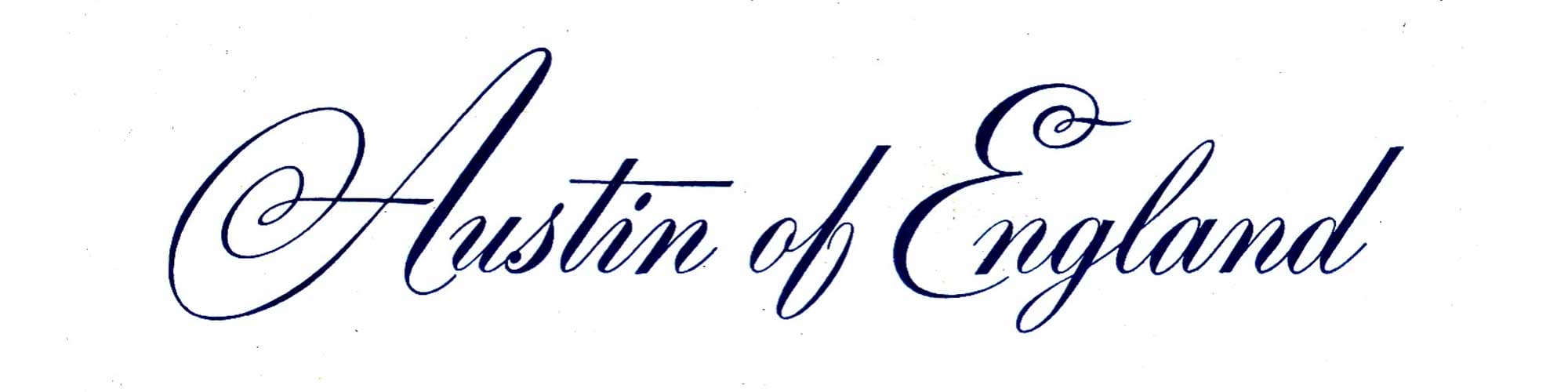
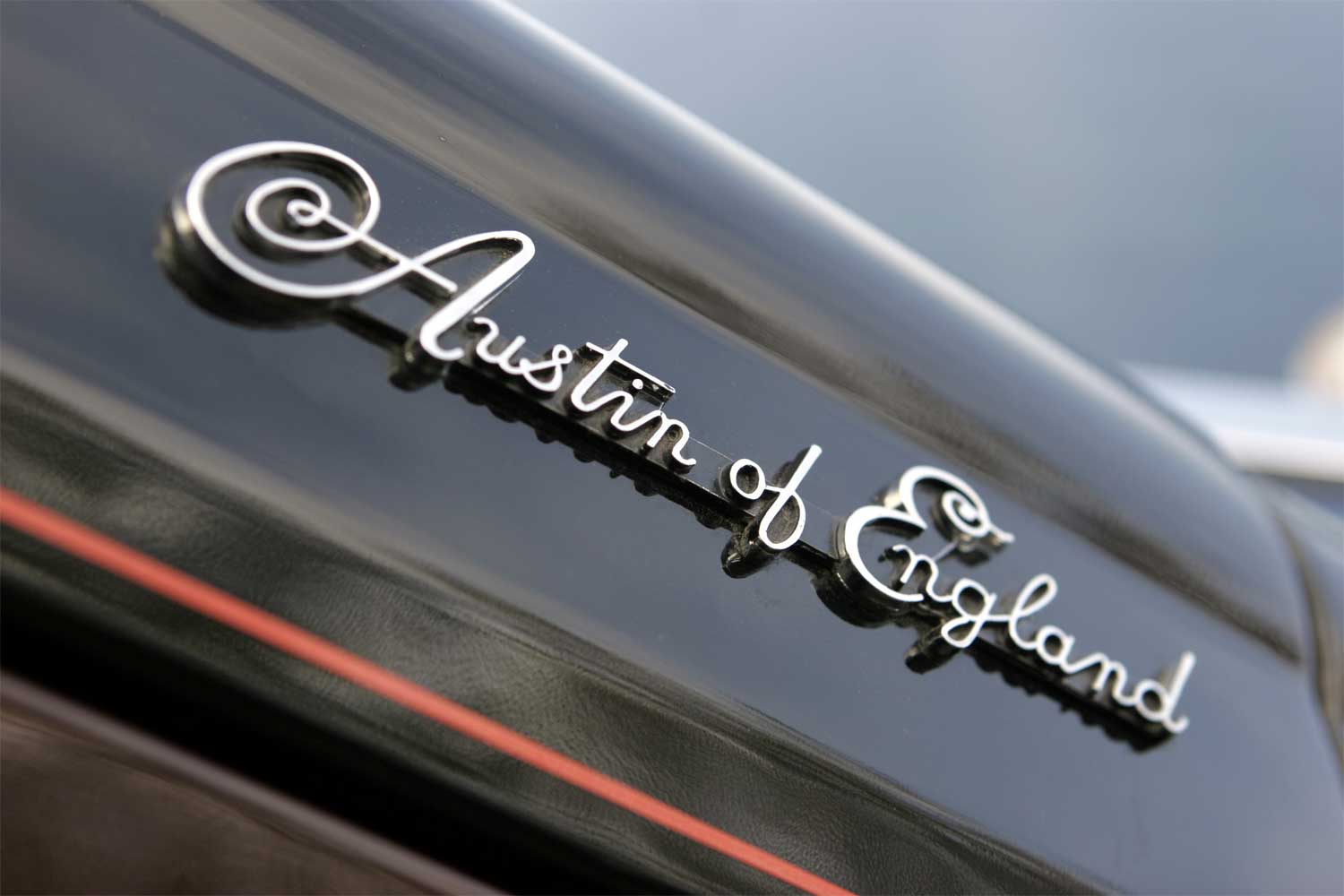
Few badges are more closely associated with Austin’s post-war success than the elegant “Austin of England” script.
Although the phrase appeared in earlier advertising, it didn’t become a decorative badge until after World War Two. During Britain’s famous “Export or Die” economic recovery campaign, Austin proudly used the badge across almost its entire vehicle range.
The logo appeared on:
- Austin passenger cars
- Commercial vehicles
- Export models
While most models stopped using the script by the end of the 1950s, it survived on the Austin A35 Van until 1968 and even appeared on the Austin J40 pedal car until 1971, making it one of Austin’s longest-serving badges.
The Flying A (1946-1968)

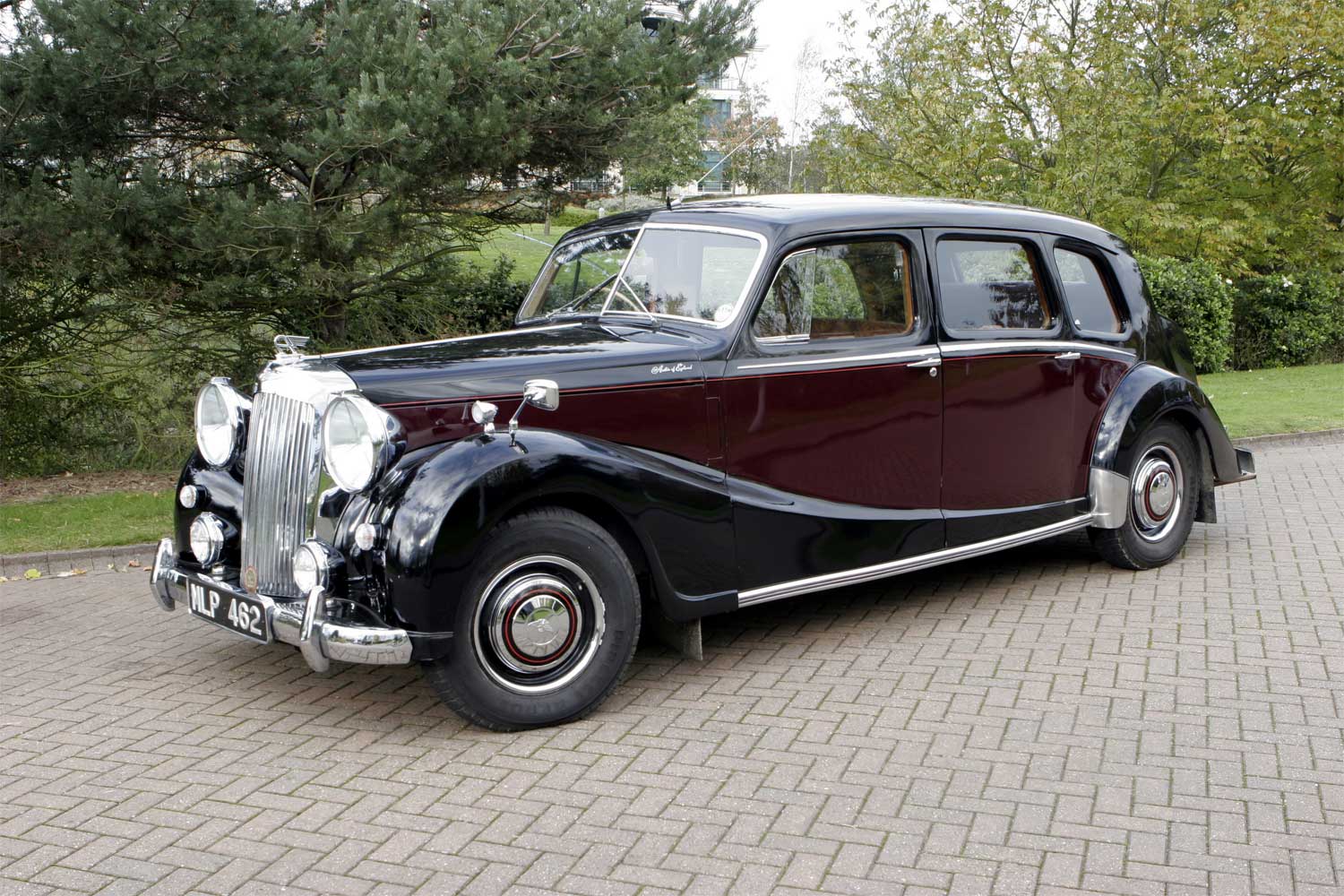
The Flying A became one of the most widely recognised symbols associated with Austin vehicles.
Designed by Dick Burzi, Austin’s chief car designer during the immediate post-war period, it was originally conceived as a bonnet mascot rather than an official company logo. It was typically mounted on the front edge of the bonnet, in a position traditionally reserved for mascots on more prestigious cars.
The Flying A appeared on many of Burzi’s post-war designs, including:
- Austin A30 and A35
- Austin A40 Devon and Hampshire
- Austin A40, A50 and A55 Cambridge
- Austin A70 Hereford
- Austin A90 Atlantic
- Austin A90, A95 and A105 Westminster
The A90 Atlantic was particularly unusual, carrying two Flying A mascots, one mounted on each wing.
The A35 Van was the last Dick Burzi-designed Austin passenger vehicle to carry the Flying A mascot when production ended in 1968. Although the Austin Half Ton Van and Pick-Up continued in production until 1973, the Flying A had already disappeared from the range by 1968.
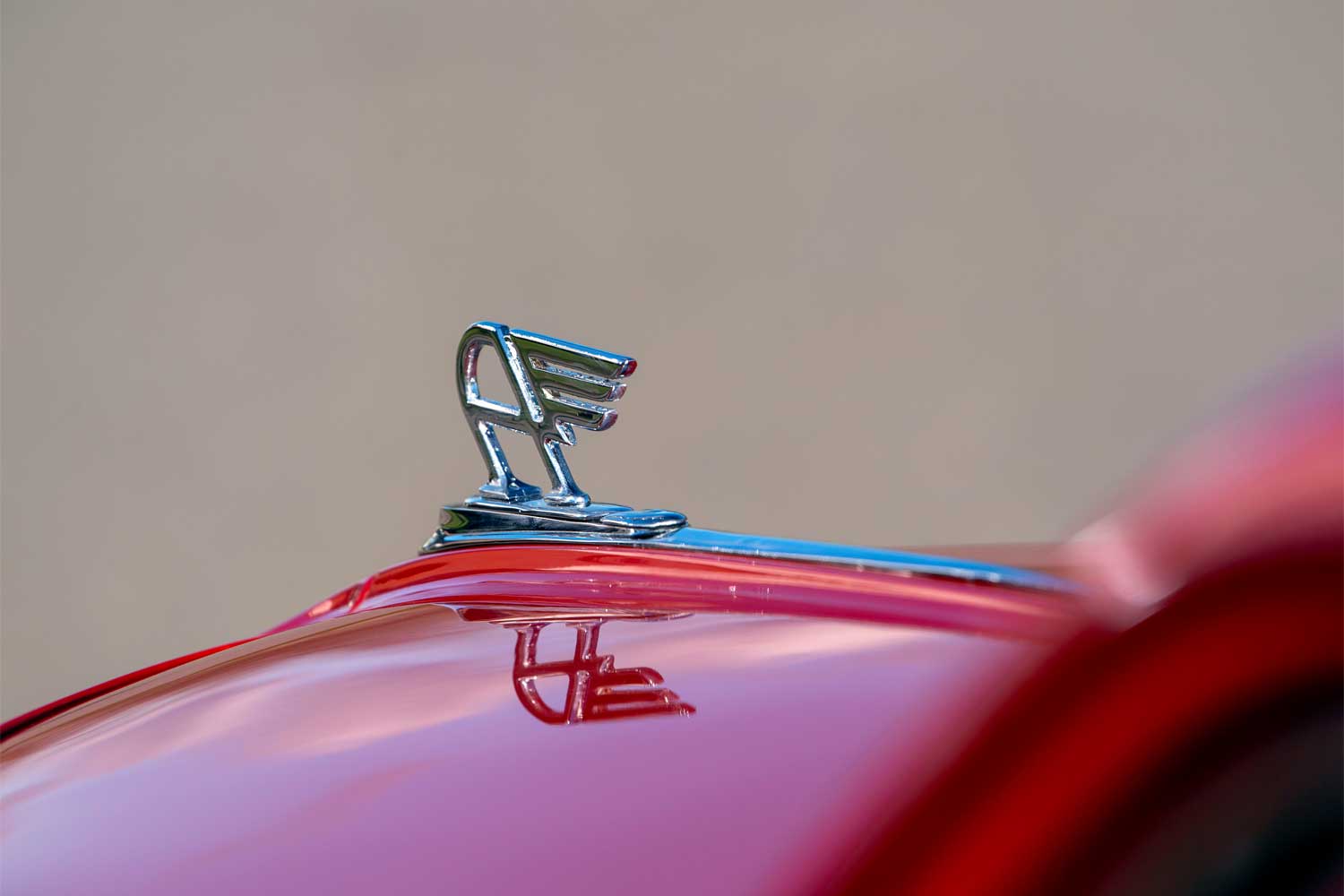
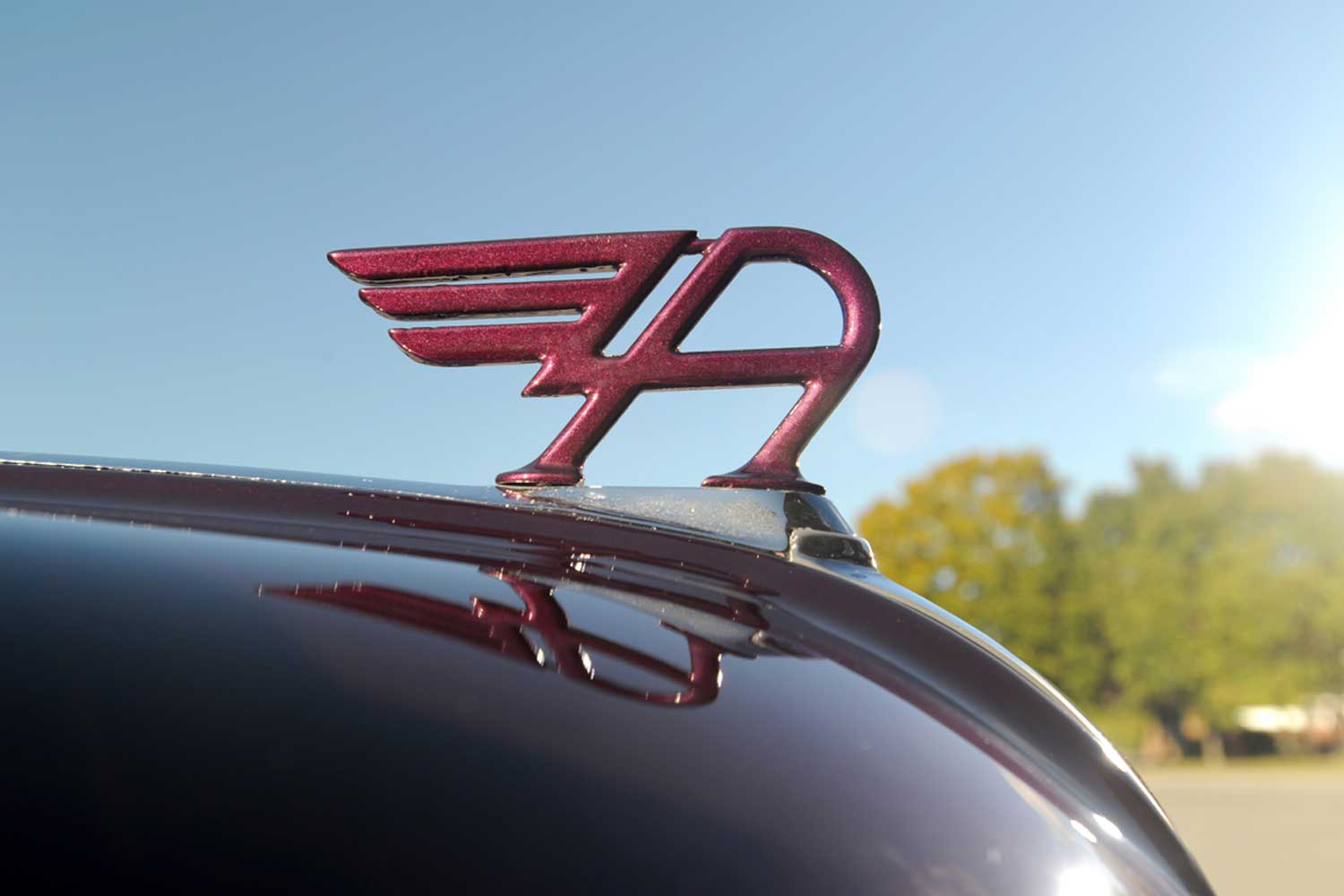
Although the company did not officially regard the Flying A as a corporate logo, it became closely associated with the Austin marque. Its simple design was adopted by foundries, forges and component manufacturers as a casting or forging mark on Austin parts. In some cases, the Flying A continued to appear on A-Series engine components used in Mini production into the 1990s.
Today, many classic Austin owners choose to fit Flying A mascots to their vehicles as a tribute to one of the best-known symbols associated with the marque.
The Austin Atlantic Badge (1949-1952)

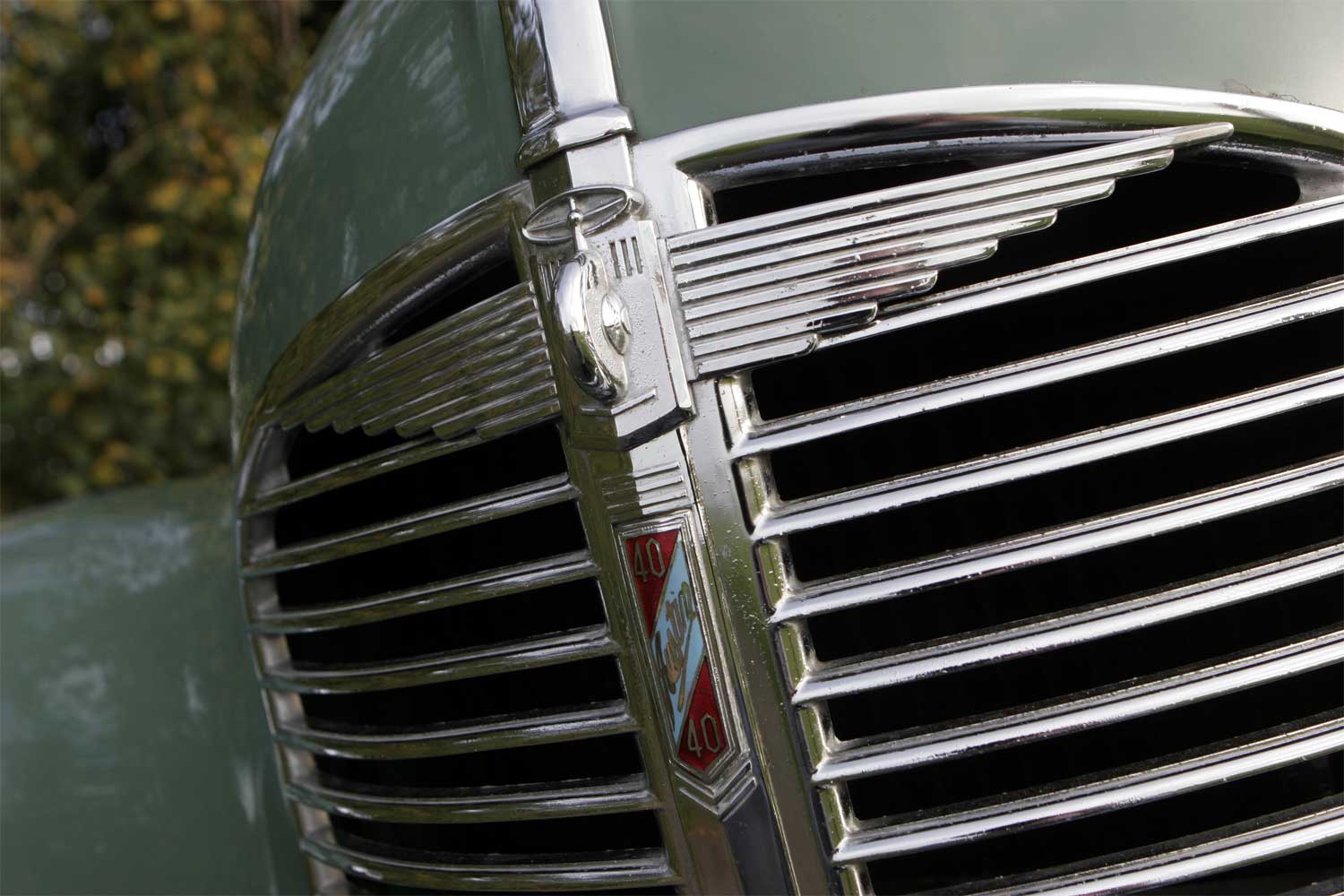
One of the most unusual Austin model-specific badges was that fitted to the Austin A90 Atlantic.
Used exclusively on the A90 Atlantic, this badge was not a company logo in the traditional sense but a model-specific emblem. Produced between 1949 and 1952, the Austin A90 Atlantic featured a distinctive bonnet badge that incorporated three important Austin symbols:
- The Winged Steering Wheel
- The Flying A
- The Austin family armorial shield
The badge was a modified version of the standard A90 bonnet emblem, replacing the Austin script with a Winged A motif. Today it is recognised by enthusiasts as a distinctive feature of the Austin A90 Atlantic.
Austin Seven and Austin Mini Bonnet Badge (1959-1967)

This badge was never used on Austin Cooper or Cooper S versions of the Mk I Mini, only the standard, Deluxe, Super and Super Deluxe versions.
This bonnet badge was used exclusively on Austin-badged versions of the Mini Mk I between 1959 and 1967.
For its first two years of production, the car was marketed as the Austin Seven. From 1961 onwards it became known as the Austin Mini, though the badge design remained largely unchanged.
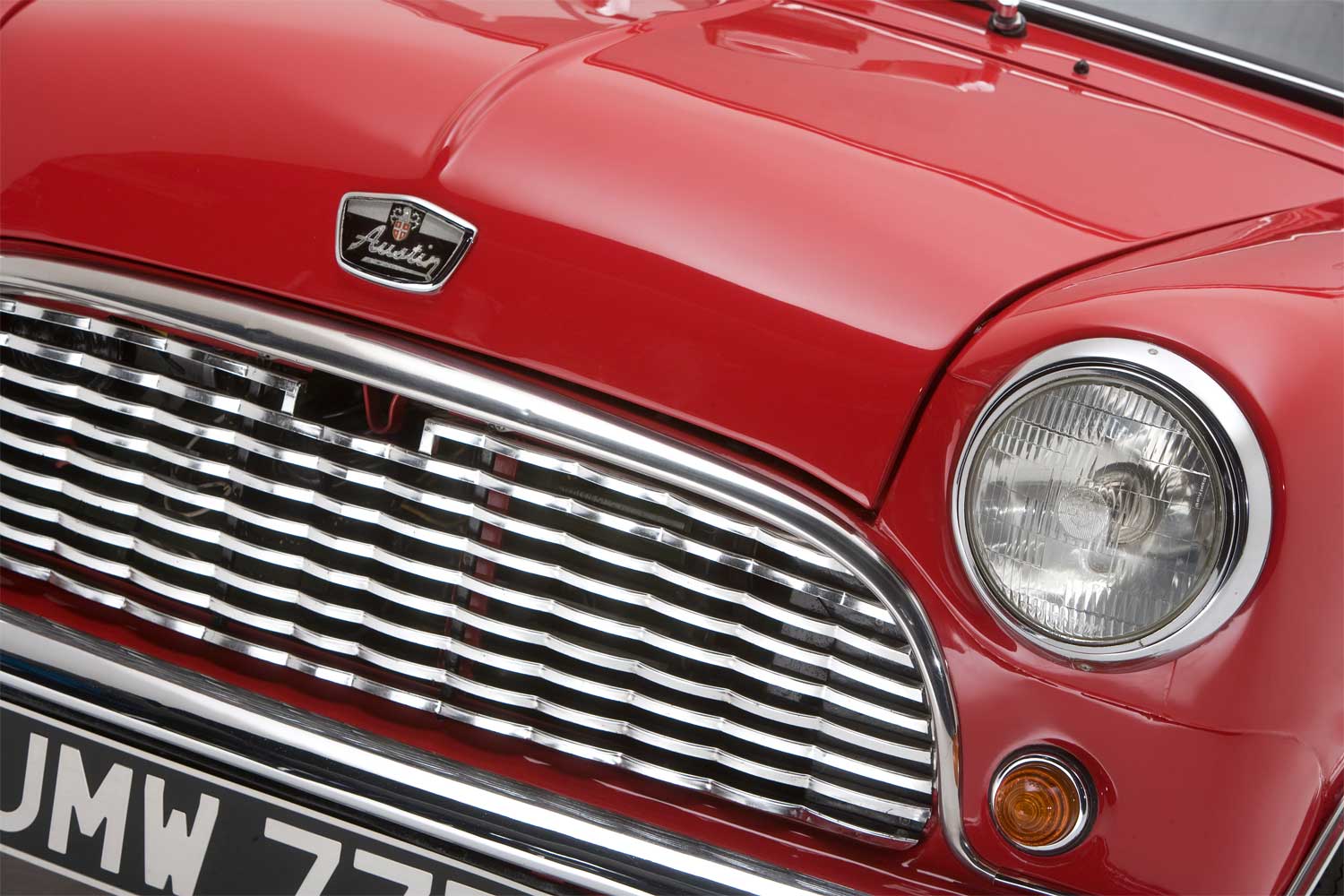
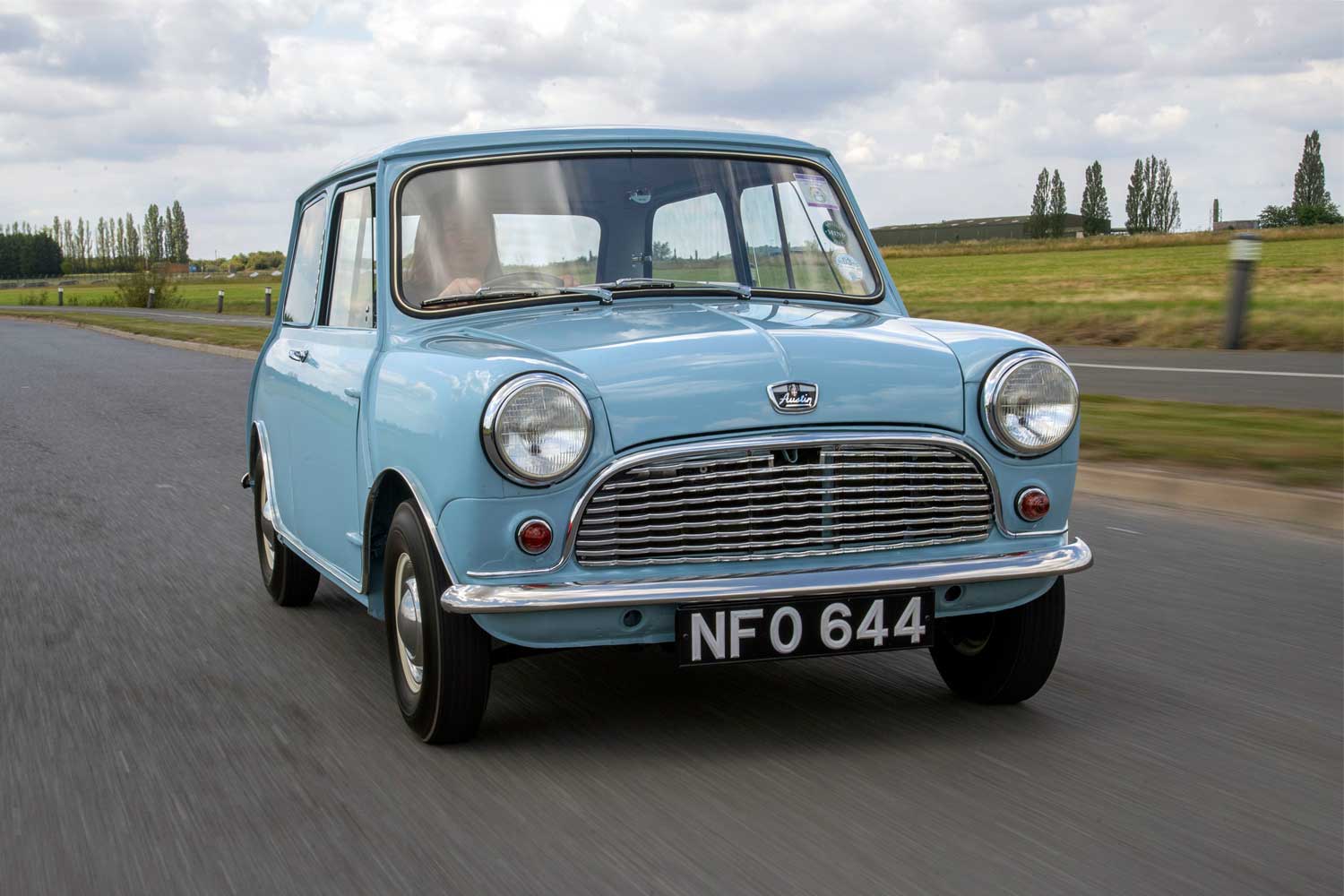
A similar badge was used on the radiator grille or bonnet of various other Austin models from the 1950s and early 1960s, including the Austin A40/A50 and A55 Cambridge models, the Austin A40 Farina and the Austin A90, A95, A99, A105 and A110 Westminster models. However, unlike these versions, the badge used on the Austin Seven and Austin Mini omitted the lower horizontal gold panel. The badge was used only on standard production versions and was not fitted to Austin Cooper or Cooper S models.
Austin Seven and Austin Mini Boot Script (1959-1967)
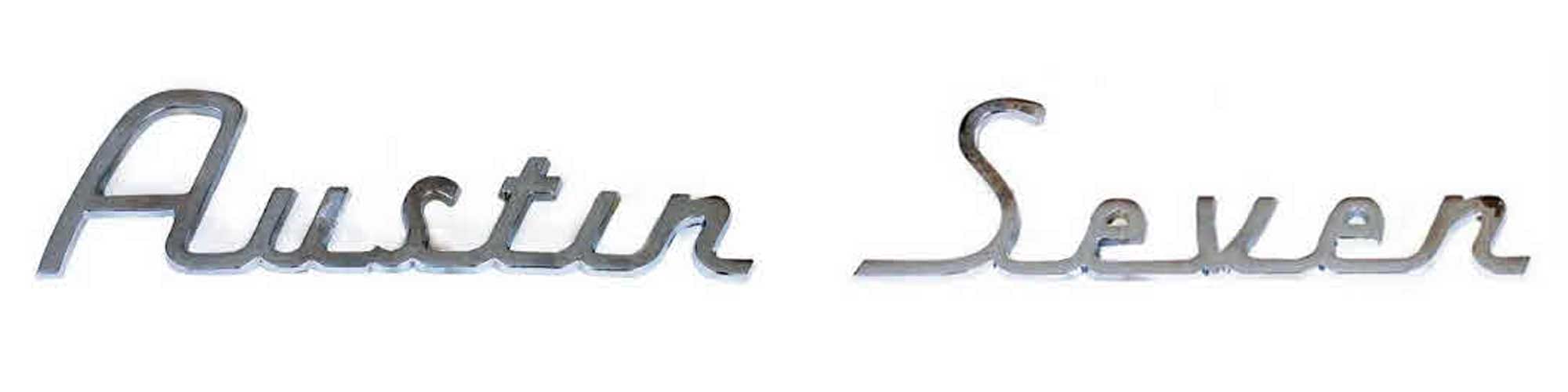
One of the most distinctive pieces of branding used on the Mk I Mini was the elegant script found on the boot lid of Austin-badged cars.
When the Mini was launched in 1959, Austin’s version was marketed as the Austin Seven, and featured a stylish “Austin Seven” script across the rear of the vehicle. This remained in place until 1961, when the model was renamed the Austin Mini. While the name changed, the design language remained consistent, with the “Seven” lettering replaced by a matching “Mini” script.
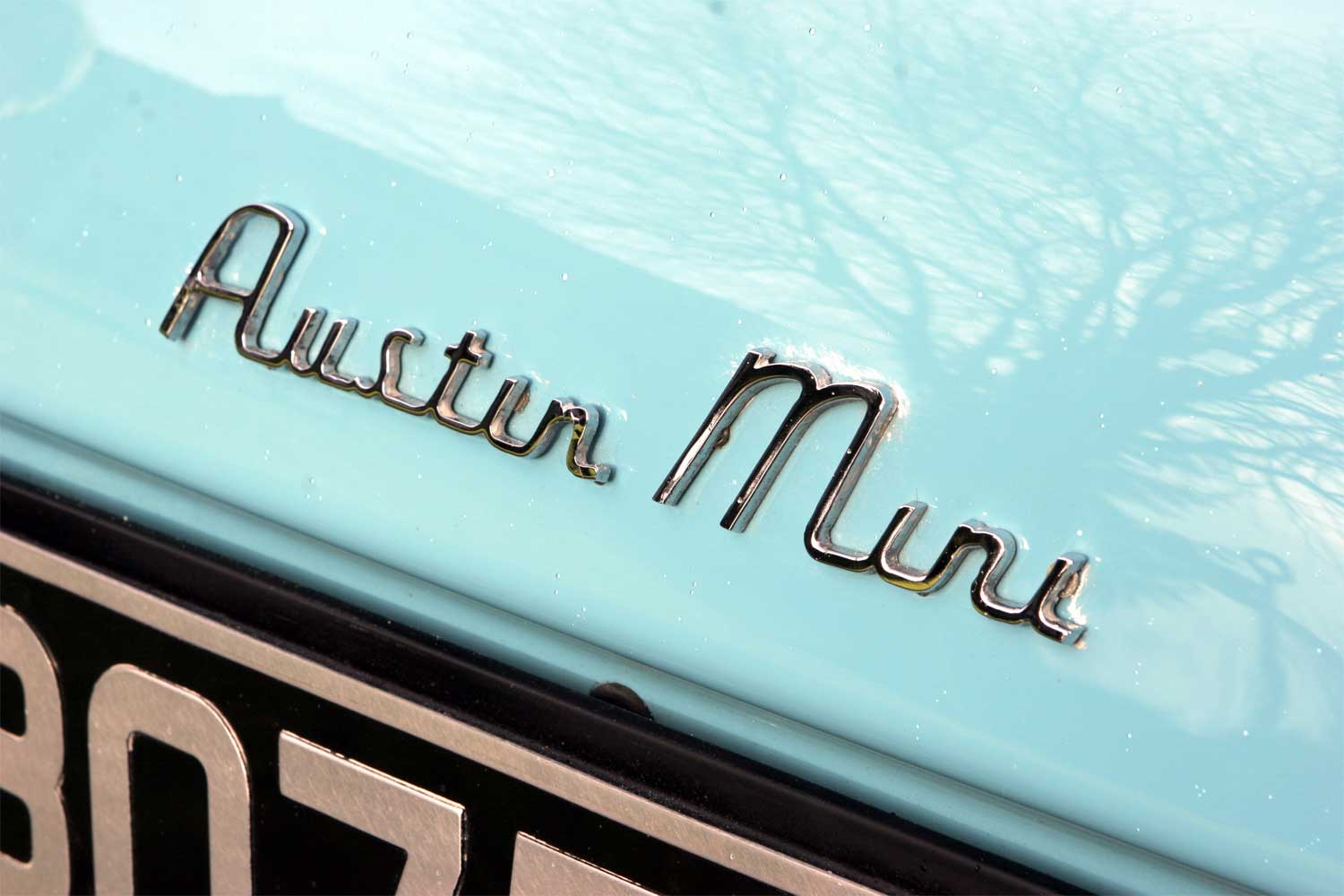
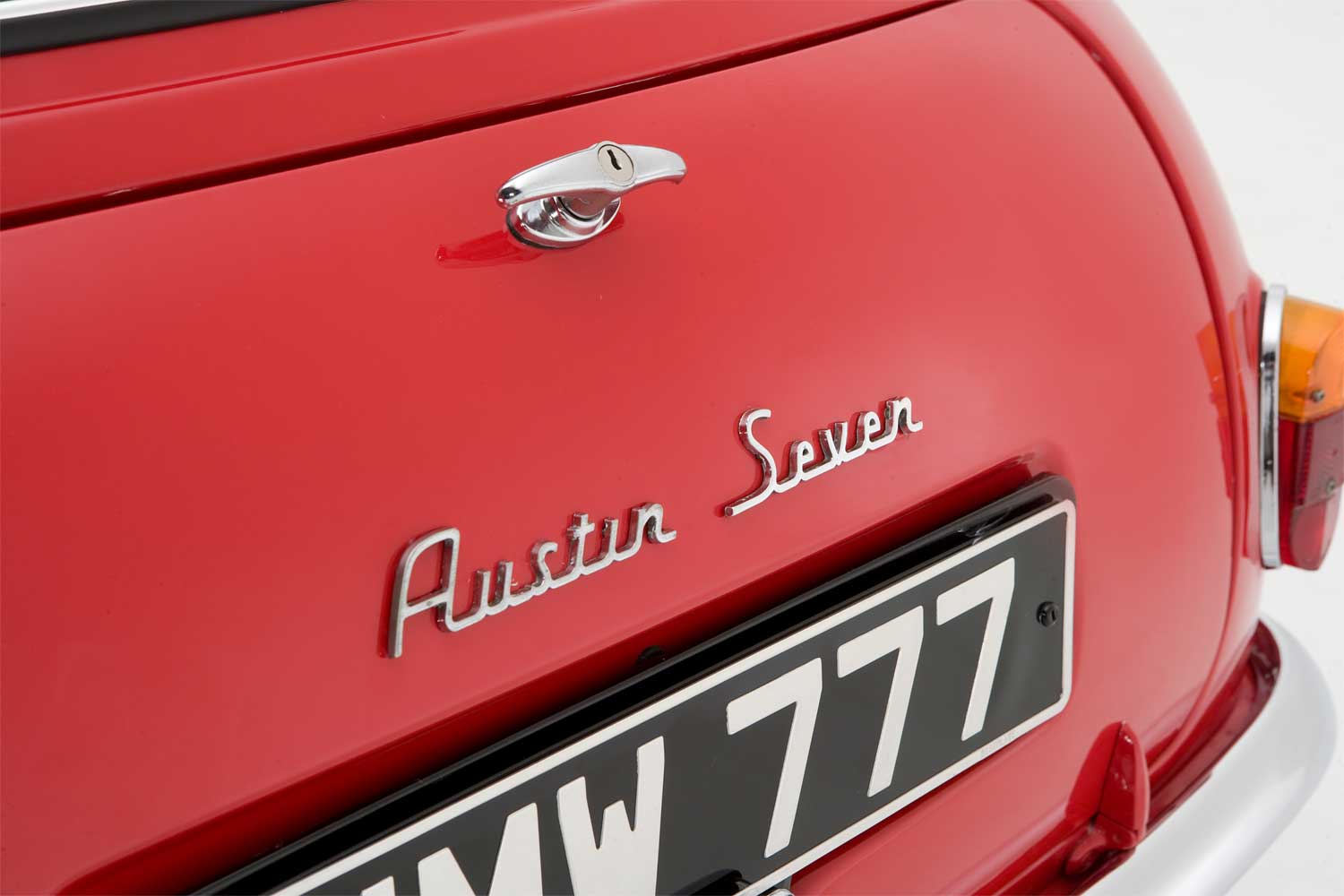
The familiar Austin script itself proved enduring. Introduced on the Austin Seven, it was carried over to all subsequent Austin Mini Mk I models, including the popular Cooper and Cooper S variants. Its use was not limited to the Mini range either. The same script also appeared on several other Austin models of the period, including the Austin 1100 Mk I, A40 Farina, A55 and A60 Cambridge, and the A99 and A110 Westminster.
Although Austin used a variety of scripts and badges across its model range during the 1950s and 1960s, this particular design became closely associated with some of the company’s most recognisable vehicles, helping to define Austin’s visual identity during an important era in the marque’s history.
Preserving Austin Heritage
Austin’s badges, scripts and mascots are far more than decorative details. They provide a visual record of changing styles, engineering achievements and the evolution of one of Britain’s most influential motor manufacturers.
Whether it is the unique Austin Atlantic badge, the patriotic Austin of England script or the famous Flying A mascot, each design represents a different chapter in Austin’s story. Together, they continue to help enthusiasts, collectors and historians preserve the rich heritage of the Austin name.
Today British Motor Heritage manufactures all the body panels and complete bodyshells for Austin Healey Sprites and MG Midgets produced from 1966 onwards and many parts for pre1966 models.
Back To News